
01
Breath & State Regulation
The foundation of regulation.
Breath is one of the fastest ways to influence the body’s stress response, energy levels, and recovery capacity.
The method behind Calm Fields
A whole-body approach to movement and nervous system health
A science-informed movement framework designed to help the body regulate stress, restore resilience, and build long-term wellbeing through breath, movement, fascia, strength, and awareness.
The story behind the method
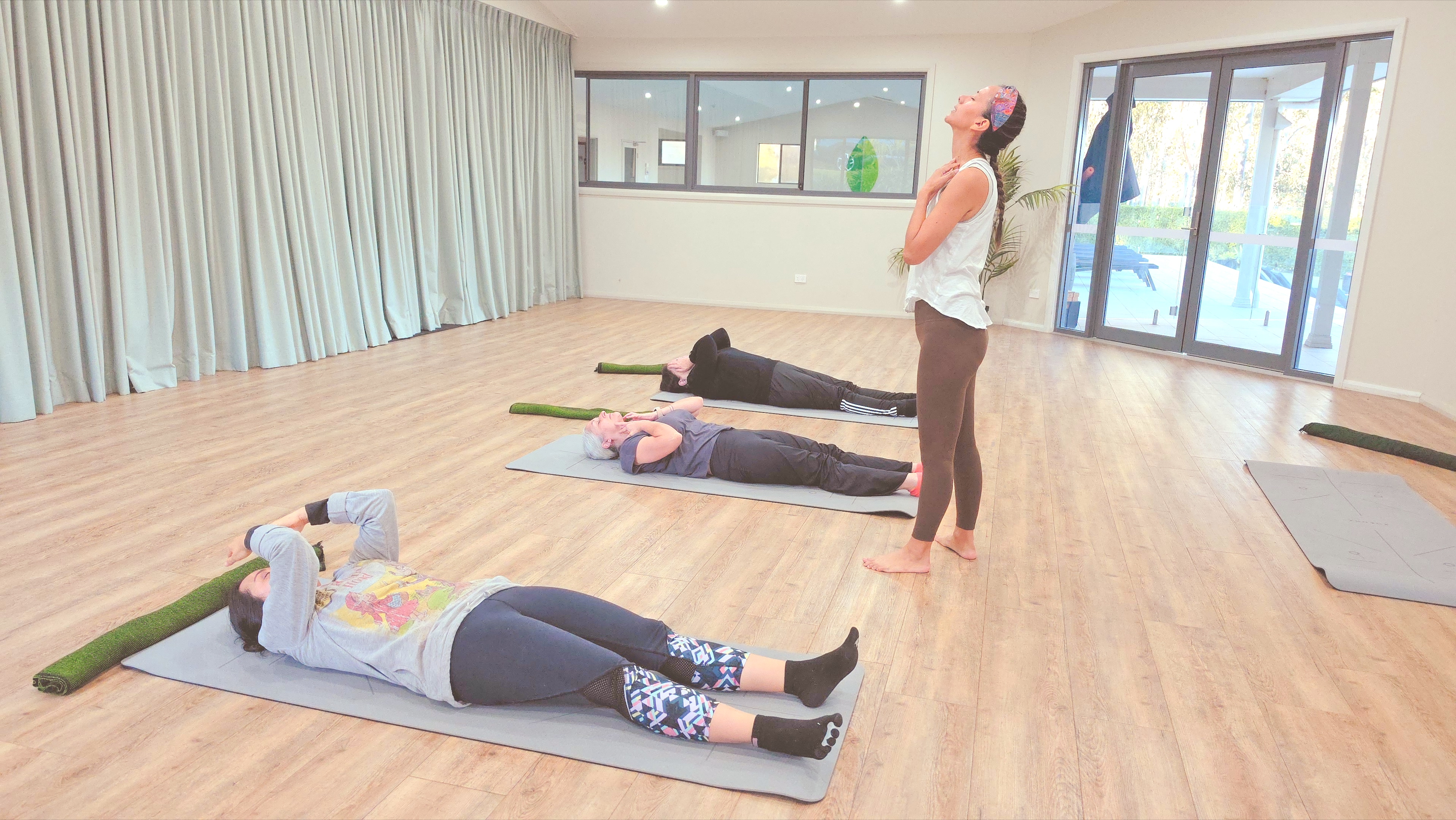
The SBR Method™ was born from a period in my life when I realised that doing more wasn't helping me feel better.
I was teaching yoga, working in IT, studying, meditating, and trying to do all the "right" things. Yet underneath it all, I was exhausted, disconnected, and constantly rushing.
When I was diagnosed with Graves' disease, my body made something impossible to ignore. I was exhausted but couldn't rest. My heart raced when I was sitting still. My body felt tense, reactive.
That experience changed me. It made me realise that wellbeing is not just about discipline or doing more. Sometimes the body is asking for something much simpler.
Safety, rhythm, and space to come back into itself.
Over time, I began exploring breathwork, movement, recovery practices, and the autonomic nervous system education. And I slowly came to understand the difference between feeling better in a moment and actually helping the body rebuild trust.
The SBR Method™ grew from that place — from learning that the body does not need to be forced into healing.
It needs the right conditions to
soften, regulate, and recover.
That is what this method is here to support.
It brings together breath, different modalities of movement, fascia, lymphatic flow, strength, and nervous system awareness to help the body move out of protective patterns and back into connection.
Because sometimes the most powerful shift is not pushing harder.
It is learning how to feel safe enough to let go.
The core principle
The body does not thrive under chronic stress or constant effort. It responds best to rhythm, safety, movement, recovery, and repetition.
When the nervous system is overwhelmed, even healthy habits can stop feeling effective. True recovery depends not only on what we do, but on the state the body is in while we do it.
Regulation is not
about relaxation.
It's about adaptability.
The SBR Method™ is built around this principle. Using breath, movement, nervous system awareness, and recovery practices, it helps the body move more fluidly between effort and recovery.
The goal is not just to relax. It is to help the body remember how to regulate, recover, and adapt with greater ease.
The core of the method
The SBR Method works across five interconnected systems that influence how we breathe, move, recover, regulate, and adapt.
01
The foundation of regulation.
Breath is one of the fastest ways to influence the body’s stress response, energy levels, and recovery capacity.
02
Building adaptability and resilience.
The nervous system influences how we respond to stress, recovery, sleep, movement, and emotion.
03
Supporting movement, circulation, and recovery.
The lymphatic and fascial systems help support fluid movement, tissue health, and communication throughout the body.
04
Strength that supports the body.
This pillar develops stability, coordination, balance, and functional strength.
05
Turning practice into lasting change.
Awareness helps connect what we experience physically, mentally, and emotionally.
Each pillar is informed by a growing body of research. While the SBR Method is practical and experience-based, its approach is influenced by several fields that help explain how the body regulates, adapts, and recovers.
Research-informed foundations
The SBR Method is informed by research across several interconnected disciplines, including nervous system regulation, movement science, fascia research, sensorimotor control, breath physiology, and somatic awareness. Rather than relying on a single theory, it brings together insights from multiple fields that help explain how the body regulates, adapts, and recovers.
The body is designed to move between activation and recovery.
Research suggests resilience is less about staying calm all the time and more about adapting efficiently to changing demands.
The SBR Method supports this adaptability through breathwork, movement, recovery practices, and nervous system awareness.
Feelings of safety influence how we move, connect, and recover.
Polyvagal-informed research suggests the nervous system continuously evaluates cues of safety and threat, shaping our physiological and emotional responses.
The SBR Method uses breath, movement, body awareness, and recovery practices to help create conditions that support regulation and connection.
Stability depends on more than strength alone.
Research suggests balance, coordination, and posture rely on communication between the nervous system, joints, muscles, and sensory systems.
The SBR Method incorporates proprioception, vestibular input, and coordinated movement to help the body organise and respond more efficiently.
Connective tissue responds to movement, hydration, and mechanical load.
Research suggests fascia adapts to the forces placed upon it and may function best when exposed to varied, dynamic movement rather than prolonged static positions.
The SBR Method incorporates elastic movement, rebound, rhythmic loading, and tissue hydration practices to support tissue adaptability and movement efficiency.
Awareness of internal sensations can influence regulation.
Research in body-oriented approaches suggests that noticing physical sensations, tension patterns, breath, and posture may support emotional regulation and self-awareness.
The SBR Method uses breathwork, movement, and sensory awareness practices to help people recognise internal signals and respond with greater adaptability.
Movement helps support circulation and fluid movement throughout the body.
Research suggests lymphatic flow is influenced by muscle contraction, breathing, body position, and pressure changes created through movement.
The SBR Method incorporates rhythmic movement, breath-led pressure changes, and gentle muscular activation to support circulation, drainage, and recovery.
The experience
Changes often emerge gradually through consistent practice
People often describe feeling calmer, lighter, and more connected to themselves after practicing the SBR Method™.
Many notice a sense of spaciousness in the body — less tension, less holding, and more ease in the way they move and breathe.
Others are surprised by how different the work feels. Rather than simply pushing harder, the method challenges the body through stability, coordination, nervous system awareness, breath, and sensory integration.
Some people experience powerful “aha” moments through the breathing practices — noticing how closely their breath, tension patterns, emotions, and mental clarity are connected.
Common experiences include.
Many people leave feeling not only physically different, but more connected to themselves again.
How the method works
A structured rhythm between activation and recovery.

Arrive into the body through breath, grounding, and nervous system awareness.

Open pathways through mobility, circulation, and gentle activation.

Create movement freedom through mobility, coordination, and adaptable movement patterns.

Build strength, stability, and adaptability through controlled challenge.

Connect breath, movement, and awareness into embodied practice.

Support restoration through stillness, breath, and guided recovery.
The SBR Method is designed to be experienced, not just understood.
Explore classes, workshops, and guided experiences designed to help you move, recover, regulate, and adapt with greater ease.